
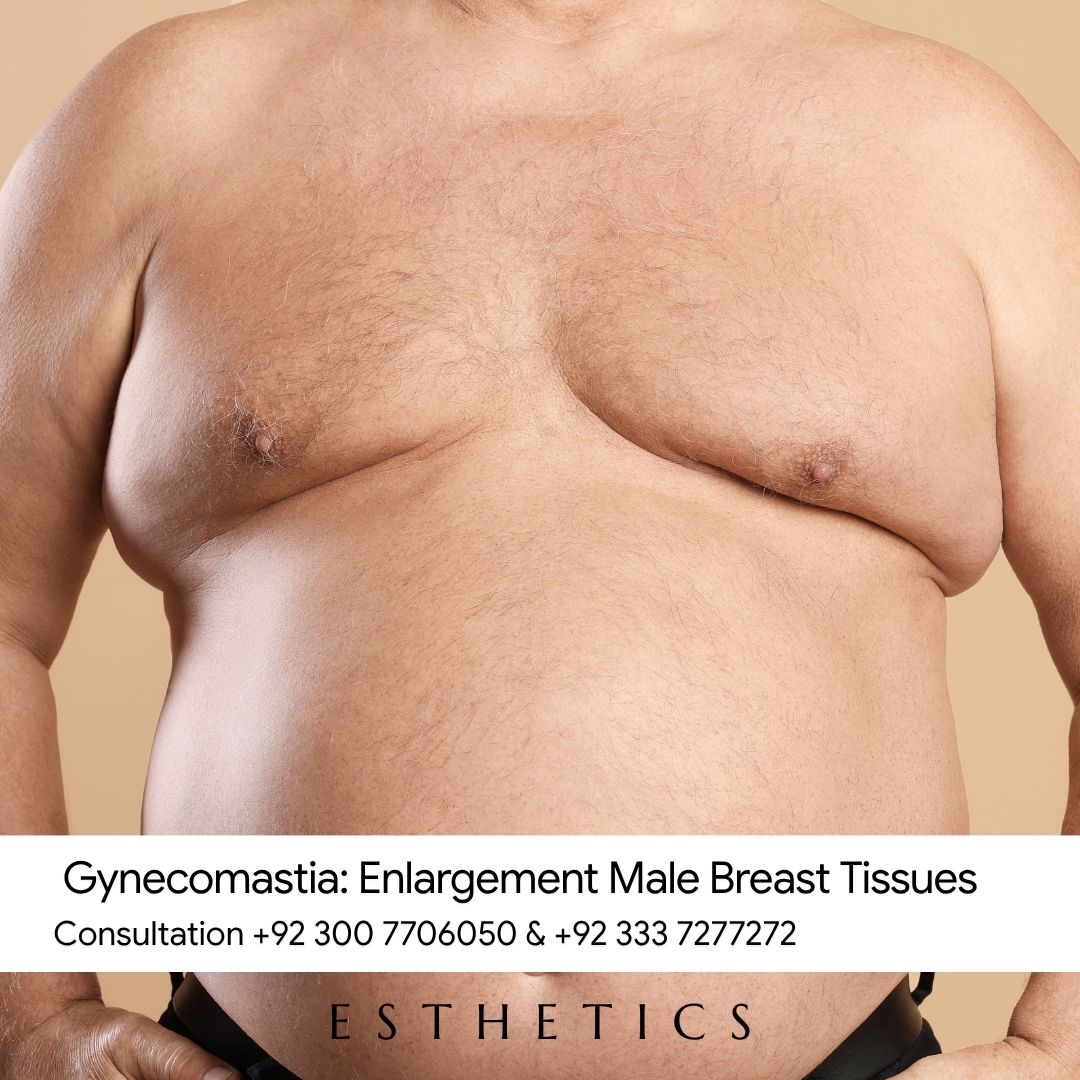
Enlargement of male breast tissue, commonly known as gynecomastia, is a condition in which glandular breast tissue increases in size in males. It can affect one or both sides of the chest and may occur at different stages of life, including puberty and adulthood.
For men living in Blue Area, Islamabad, noticing an enlarged chest can lead to concerns about appearance, confidence, exercise, clothing and whether the enlargement is simply due to body fat or represents true gynecomastia.
The important distinction is that gynecomastia and excess chest fat are not exactly the same condition. Gynecomastia involves enlargement of glandular breast tissue, whereas pseudogynecomastia refers primarily to increased fatty tissue in the chest.
In some people, lifestyle changes and weight reduction can improve the appearance of a chest enlarged mainly by fat. However, exercise alone generally cannot remove established glandular breast tissue.
This guide explains male breast enlargement in Blue Area, Islamabad, possible causes, symptoms, gynecomastia self-care, weight loss, exercise, when to see a specialist, diagnosis, treatment options and gynecomastia surgery.
What Is Gynecomastia?
Gynecomastia is an enlargement of glandular breast tissue in males.
It can cause:
- Enlarged nipples or areola
- A fuller-looking chest
- A firm or rubbery area underneath the nipple
- Breast tenderness
- Nipple sensitivity
- Uneven enlargement
- Enlargement of one or both breasts
Gynecomastia is commonly associated with an imbalance between the effects of testosterone and estrogen on breast tissue. It can occur during puberty, later adulthood and in association with certain medicines or medical conditions.
In many cases, gynecomastia is benign and does not cause serious physical complications. Nevertheless, persistent enlargement can have a significant psychological and cosmetic impact.
Male Breast Enlargement vs Chest Fat
This is one of the most important distinctions.
Gynecomastia
Gynecomastia involves glandular breast tissue.
It may feel like a firm or rubbery area beneath the nipple.
Pseudogynecomastia
Pseudogynecomastia is enlargement caused primarily by fat accumulation.
It is more likely to improve with overall weight loss.
Cleveland Clinic explains that obesity can increase male breast size because of excess adipose tissue, which is different from true gynecomastia involving glandular tissue.
Some men can have both conditions simultaneously—glandular tissue plus excess chest fat.
Why Does Male Breast Tissue Become Enlarged?
There are several possible causes.
The most common underlying mechanism involves changes in the balance between testosterone and estrogen.
Potential causes include:
- Puberty
- Aging
- Weight gain
- Obesity
- Hormonal disorders
- Certain medications
- Anabolic steroid use
- Alcohol and some recreational drugs
- Liver disease
- Kidney disease
- Thyroid disorders
- Low testosterone
- Certain tumors
Mayo Clinic notes that gynecomastia can occur when testosterone levels fall relative to estrogen or when estrogen-related effects increase.
Gynecomastia During Puberty
Gynecomastia is relatively common during puberty.
Hormonal changes during adolescence can temporarily increase breast tissue.
In many teenagers, the condition improves naturally as hormone levels stabilize.
Cleveland Clinic notes that puberty-related gynecomastia commonly improves over approximately six months to two years.
Therefore, teenage boys with newly developed breast enlargement should not automatically assume that surgery is necessary.
A medical evaluation can determine whether observation is appropriate.
Gynecomastia in Adult Men
Persistent breast enlargement in adulthood may have several possible explanations.
It can be associated with:
- Hormonal changes
- Weight gain
- Medications
- Anabolic steroids
- Medical conditions
- Aging
Adult gynecomastia that persists or progressively increases should be assessed by a healthcare professional.
The goal is not simply to determine how to reduce the chest.
The first question should be:
Why has the breast tissue become enlarged?
Gynecomastia in Overweight Men
Being overweight can contribute to male breast enlargement.
Increased body fat can make the chest appear larger and may also influence hormone metabolism.
This can result in a combination of:
Chest fat + glandular breast tissue
Weight reduction can improve the fat component, but it may not completely eliminate glandular tissue.
Can Exercise Remove Gynecomastia?
This is one of the most searched questions about gynecomastia.
The answer depends on what is causing the enlargement.
If the chest enlargement is primarily due to excess fat, losing weight through nutrition and exercise may reduce the size of the chest.
If the enlargement is primarily due to glandular breast tissue, exercise cannot directly remove that gland.
Exercise can still improve:
- Overall body composition
- Chest muscle development
- Fitness
- Weight management
- General health
But it should not be presented as a guaranteed cure for true gynecomastia.
Gynecomastia Self-Care
If you have noticed male breast enlargement, there are several sensible self-care measures you can take while arranging appropriate medical evaluation.
1. Maintain a Healthy Weight
If you are overweight, gradual weight reduction may reduce excess chest fat.
A balanced diet and consistent physical activity are preferable to crash diets.
2. Exercise Regularly
Strength training can improve overall body composition.
Useful exercises may include:
- Push-ups
- Bench press
- Incline press
- Dumbbell press
- Chest fly exercises
- Rows
- Shoulder exercises
- General resistance training
However, exercise should be viewed as a way to improve fitness and reduce excess body fat—not as a guaranteed method of removing glandular breast tissue.
3. Reduce Unnecessary Alcohol Consumption
Alcohol can contribute to health problems and is among substances associated with gynecomastia in some circumstances.
If you drink alcohol, discuss appropriate limits with your healthcare professional.
4. Avoid Anabolic Steroids Without Medical Supervision
Anabolic steroids can disrupt the body’s hormonal balance and are associated with gynecomastia.
Men using anabolic steroids for bodybuilding should understand that hormonal manipulation can produce unwanted physical effects.
If you are already using anabolic steroids, speak with a qualified healthcare professional rather than attempting to manage hormonal side effects yourself.
5. Review Your Medicines With a Doctor
Some prescription and non-prescription medicines can contribute to gynecomastia.
Examples reported by Mayo Clinic include certain:
- Anti-androgens
- Hormonal medicines
- Heart medicines
- Ulcer medicines
- Psychiatric medicines
- Opioids
- Other medications
Do not stop a prescribed medicine on your own.
If you suspect a medicine is contributing to breast enlargement, ask the prescribing doctor whether an alternative is appropriate.
6. Avoid Unregulated “Hormone Boosters”
Products marketed online as:
- Testosterone boosters
- Muscle-building supplements
- Hormone-balancing products
- Male enhancement supplements
may contain ingredients that are not obvious from the label.
If you are taking supplements, tell your doctor during your consultation.
7. Wear Appropriate Clothing
If chest enlargement affects confidence, well-fitting clothing or compression garments may temporarily improve appearance.
This does not treat the underlying condition, but it can make daily activities more comfortable while you investigate treatment options.
Can Diet Cure Gynecomastia?
Diet can help reduce excess body fat, but it does not reliably remove established glandular breast tissue.
A healthy diet can nevertheless be valuable for:
- Weight management
- Metabolic health
- Reducing excess body fat
- Supporting exercise
- Maintaining a healthy body composition
If your chest enlargement remains despite reaching a healthy weight, true gynecomastia may be contributing.
Foods That Reduce Gynecomastia
There is no specific food proven to directly dissolve established gynecomastia gland tissue.
Instead of looking for a “gynecomastia diet,” focus on:
- Adequate protein
- Vegetables
- Fruits
- Whole grains
- Healthy fats
- Appropriate calorie intake
- Reduced highly processed foods
- Appropriate hydration
Diet should be part of an overall healthy lifestyle rather than marketed as a direct treatment for glandular gynecomastia.
Can Losing Weight Cure Male Breast Enlargement?
It depends.
If the enlargement is mostly fat:
Weight loss may substantially improve the chest.
If the enlargement is glandular:
Weight loss may reduce surrounding fat but leave the glandular tissue.
If both are present:
Weight loss may improve part of the appearance, but residual glandular tissue may remain.
A physical examination can help distinguish these possibilities.
Symptoms of Gynecomastia
Common symptoms can include:
- Enlarged breast tissue
- Swelling
- Tenderness
- Nipple sensitivity
- A firm area underneath the nipple
- Uneven chest enlargement
Gynecomastia can occur on one side or both sides.
Can Gynecomastia Affect Only One Side?
Yes.
Gynecomastia can affect:
- Both breasts equally
- Both breasts unevenly
- One breast only
Asymmetry does not automatically mean something serious, but a new or unusual one-sided lump should be evaluated by a healthcare professional.
When Should You See a Doctor?
You should arrange medical evaluation if you notice:
- Persistent breast enlargement
- A firm or hard lump
- Significant pain
- Breast tenderness
- Nipple discharge
- Skin changes
- Dimpling
- Rapid enlargement
- New one-sided breast changes
Mayo Clinic specifically recommends medical assessment for swelling, pain/tenderness, nipple discharge, a firm or hard lump or dimpled breast skin.
Is Male Breast Cancer Possible?
Male breast cancer is rare, but male breast lumps should not automatically be assumed to be gynecomastia.
A healthcare professional may evaluate the lump to distinguish gynecomastia from other conditions.
Mayo Clinic notes that male breast cancer is uncommon but can occur, and a firm lump or one-sided enlargement can warrant further evaluation.
This is one reason self-diagnosis is not recommended.
Gynecomastia Diagnosis
A specialist may begin with a detailed medical history and physical examination.
The evaluation may include questions about:
- When the enlargement started
- Whether it is increasing
- Pain or tenderness
- Medications
- Supplements
- Steroid use
- Alcohol
- Recreational drugs
- Weight changes
- Other medical symptoms
The physical examination may assess:
- Breast tissue
- Chest
- Abdomen
- Genital area
- Other signs of hormonal or systemic conditions
Mayo Clinic states that blood tests and, when indicated, imaging such as mammography, ultrasound, CT, MRI or testicular ultrasound may be used depending on the clinical situation.
Blood Tests for Gynecomastia
Depending on the history and examination, a doctor may consider laboratory testing.
Potential investigations can relate to:
- Testosterone
- Estradiol
- Liver function
- Kidney function
- Thyroid function
- Other hormones
The exact tests should be selected according to the individual patient rather than ordering every possible hormone test automatically.
Ultrasound for Male Breast Enlargement
An ultrasound may sometimes help evaluate a breast lump or determine the nature of breast tissue.
Whether imaging is required depends on the clinical examination.
Not every case of typical gynecomastia requires extensive imaging.
Gynecomastia Treatment Options
Treatment depends on:
- Cause
- Duration
- Severity
- Age
- Symptoms
- Degree of glandular tissue
- Amount of excess fat
- Patient preference
Potential approaches include:
- Observation
- Treatment of an underlying condition
- Medication review
- Weight management
- Selected medical therapy
- Surgery
Mayo Clinic notes that persistent or symptomatic gynecomastia may sometimes be treated medically or surgically.
Observation
Not every case needs immediate treatment.
In adolescents, particularly when gynecomastia is associated with normal pubertal hormonal changes, observation may be appropriate because the enlargement often resolves naturally.
For adults, observation may also be appropriate in selected situations after proper evaluation.
Treating the Underlying Cause
If gynecomastia results from an underlying condition, treating that condition may help.
Possible causes include:
- Hormonal disorders
- Thyroid disease
- Liver disease
- Kidney disease
- Hypogonadism
- Certain tumors
Cleveland Clinic emphasizes that identifying and addressing the underlying cause is an important component of management.
Medication Review
If a medication is contributing to gynecomastia, a doctor may consider changing or discontinuing the medicine when medically appropriate.
Never discontinue a prescription medication without discussing it with the prescribing clinician.
Medical Treatment for Gynecomastia
Certain medications have been studied or used in selected cases of gynecomastia.
Examples include:
- Tamoxifen
- Raloxifene
- Aromatase inhibitors
However, these medicines are not appropriate for self-treatment.
Mayo Clinic notes that such medicines may be considered for some adults but emphasizes that treatment depends on the individual situation.
A specialist should determine whether medication is appropriate.
Gynecomastia Surgery
When male breast enlargement persists and causes significant cosmetic or physical concerns, gynecomastia surgery may be an option.
Surgery may involve:
Liposuction
Liposuction removes excess fatty tissue.
Excision of glandular tissue
Glandular breast tissue can be surgically removed through appropriate incisions.
Combination treatment
Some patients have both excess fat and glandular tissue, so liposuction and tissue excision may be combined.
Mayo Clinic specifically describes liposuction for removing breast fat and mastectomy/excision for removing glandular tissue, with both approaches sometimes combined.
Gynecomastia Surgery vs Weight Loss
If the chest enlargement is primarily caused by excess fat, weight management may be beneficial.
But if a firm glandular component remains after weight reduction, surgery may be considered.
This is why an assessment before treatment is important.
Gynecomastia Surgery Results
The goal of gynecomastia surgery is generally to create a flatter and more masculine chest contour.
Potential improvements may include:
- Reduced breast projection
- Reduced nipple prominence
- Improved chest contour
- Better symmetry
- Improved confidence
Results vary according to the amount of glandular tissue, skin elasticity, fat distribution and surgical technique.
Recovery After Gynecomastia Surgery
Recovery varies depending on the procedure performed.
Patients may experience:
- Swelling
- Bruising
- Tenderness
- Temporary numbness
- Tightness
The surgeon provides specific instructions regarding:
- Exercise
- Compression garments
- Wound care
- Sleeping position
- Showering
- Return to work
- Follow-up appointments
Recovery should be planned individually.
Does Gynecomastia Surgery Leave Scars?
Any surgical procedure involving tissue removal can produce scars.
The location and visibility of scars depend on:
- Surgical technique
- Amount of tissue removed
- Skin excess
- Individual healing
- Incision placement
A specialist can explain the likely scar pattern during consultation.
Can Gynecomastia Come Back After Surgery?
When glandular tissue is appropriately removed, recurrence is generally less likely, but the final result can still be influenced by:
- Significant weight gain
- Hormonal disorders
- Certain medications
- Anabolic steroid use
- Other underlying causes
Identifying and addressing the underlying cause is therefore important.
Gynecomastia Treatment in Blue Area, Islamabad
If you live or work in Blue Area, Islamabad and are concerned about enlarged male breast tissue, the first step should be a professional assessment.
A specialist can help determine whether your chest enlargement is primarily:
Fat → glandular tissue → or a combination of both.
This distinction is important because the appropriate treatment may differ.
Possible management can include:
- Lifestyle and weight management
- Medical evaluation
- Medication review
- Observation
- Selected medical treatment
- Gynecomastia surgery
Gynecomastia Treatment in Islamabad
People searching for:
- Gynecomastia treatment Islamabad
- Gynecomastia surgery Islamabad
- Male breast reduction Islamabad
- Gynecomastia specialist Islamabad
- Male breast enlargement treatment Islamabad
- Gynecomastia surgery Blue Area
- Male breast reduction Blue Area
should look for a qualified specialist who can evaluate the cause rather than choosing treatment based solely on online advertisements.
Gynecomastia Treatment in Rawalpindi
Patients from Rawalpindi may also seek specialist assessment in Islamabad.
The same principles apply.
Before choosing surgery, the patient should understand:
- Whether the enlargement is fat or glandular tissue
- Whether an underlying cause needs investigation
- Whether surgery is appropriate
- What technique may be required
- Expected recovery
- Potential complications
- Total treatment cost
Gynecomastia Treatment in Pakistan
Across Pakistan, men may search for gynecomastia surgery, male breast reduction and male chest reduction.
Treatment availability and cost vary between clinics and cities.
Rather than selecting a clinic solely on price, patients should consider:
- Specialist qualifications
- Experience with gynecomastia
- Facility standards
- Surgical technique
- Pre-operative assessment
- Follow-up
- Emergency support
- Expected results
Gynecomastia Self-Care: What Actually Helps?
A practical self-care plan can include:
Maintain a healthy weight
Particularly important when excess fat contributes to chest enlargement.
Exercise consistently
Resistance training and cardiovascular activity support overall body composition.
Avoid anabolic steroids
They can contribute to hormonal disruption and gynecomastia.
Review supplements
Tell your doctor about bodybuilding and herbal supplements.
Limit alcohol
Alcohol can be associated with gynecomastia and other health problems.
Don’t self-medicate with hormones
Avoid taking testosterone, estrogen blockers or other hormonal drugs without medical supervision.
Monitor changes
Pay attention to new lumps, pain, nipple discharge or rapid enlargement.
What Gynecomastia Self-Care Cannot Do
Self-care cannot reliably:
- Dissolve glandular breast tissue
- Correct a hormonal disorder
- Remove established fibrous tissue
- Replace a surgical assessment when surgery is indicated
Exercise and weight loss can be valuable, but they should not be presented as a universal cure.
Common Myths About Male Breast Enlargement
Myth 1: “Gynecomastia is always caused by being overweight.”
False.
Gynecomastia can occur in men who are not overweight because it involves glandular tissue and hormonal factors.
Myth 2: “More chest exercises will remove the gland.”
False.
Exercise can reduce fat and build chest muscle, but it cannot directly remove established glandular tissue.
Myth 3: “Every enlarged male chest requires surgery.”
False.
Some cases resolve naturally or can be managed by treating an underlying cause.
Myth 4: “All male breast lumps are gynecomastia.”
False.
Other conditions can produce male breast lumps, including rare breast cancer. A new or unusual lump should be evaluated.
Myth 5: “Hormone medicines should be taken without testing.”
False.
Hormonal treatment should only be considered following appropriate medical assessment.
Frequently Asked Questions About Gynecomastia
What is gynecomastia?
Gynecomastia is enlargement of glandular breast tissue in males, often associated with hormonal changes involving testosterone and estrogen.
Can gynecomastia go away naturally?
Yes, particularly when it occurs during puberty. Pubertal gynecomastia often improves within months to a couple of years.
Can exercise cure gynecomastia?
Exercise can help reduce excess body fat but does not directly remove glandular breast tissue.
Can losing weight reduce male breast enlargement?
Yes, if excess fat is contributing. However, glandular gynecomastia may remain after weight loss.
What causes gynecomastia in adults?
Potential causes include hormonal changes, medications, anabolic steroids, alcohol, certain diseases and other medical conditions.
Is gynecomastia dangerous?
Most gynecomastia is benign, but a new firm lump, nipple discharge, skin changes or unusual one-sided enlargement should be medically evaluated.
Does gynecomastia cause pain?
It can. Tenderness and nipple sensitivity are recognized symptoms.
Can gynecomastia affect only one breast?
Yes. It can occur on one or both sides and may be uneven.
Can medication cause gynecomastia?
Yes. Several medications have been associated with gynecomastia.
Should I stop my medication if I develop gynecomastia?
No. Discuss it with the prescribing doctor first.
Is gynecomastia surgery permanent?
Surgical removal of glandular tissue can provide long-lasting correction, but future hormonal changes, weight gain or other causes can influence the result.
What is male breast reduction?
Male breast reduction is a surgical procedure designed to reduce excess male breast tissue and improve chest contour.
Is liposuction enough for gynecomastia?
It depends on the type of tissue involved. Liposuction removes fat but does not directly remove glandular breast tissue.
Can liposuction and gland removal be combined?
Yes. In selected patients, both techniques may be used when excess fat and glandular tissue are present.
Final Thoughts on Male Breast Enlargement and Gynecomastia
Enlargement of male breast tissue in Blue Area, Islamabad, may be caused by true gynecomastia, excess chest fat, or a combination of both.
Understanding the difference is essential.
If the enlargement is primarily fat, healthy weight management and exercise may improve the appearance.
If the enlargement is glandular, lifestyle changes may not completely remove the tissue.
Gynecomastia can also sometimes be associated with medications, anabolic steroids, hormonal disorders, thyroid disease, liver or kidney problems and other medical conditions.
For persistent or concerning breast enlargement, professional evaluation is therefore preferable to relying exclusively on home remedies.
A specialist can determine:
What is causing the enlargement → whether investigation is required → whether self-care is sufficient → whether medical treatment is appropriate → or whether gynecomastia surgery may provide the desired result.
Specialist Consultation for Gynecomastia in Blue Area, Islamabad
If you are concerned about male breast enlargement, gynecomastia, enlarged male breast tissue, chest fat, puffy nipples or persistent chest enlargement, a specialist consultation can help determine the underlying cause and the most appropriate treatment.
During consultation, the specialist can assess whether the enlargement is primarily:
- Glandular breast tissue
- Excess fat
- A combination of both
- Or another condition requiring further investigation
If treatment is appropriate, options can be discussed according to your individual condition, including gynecomastia surgery / male breast reduction where indicated.
Specialist Consultation & Procedure
For specialist consultation and information about gynecomastia assessment and procedures, visit:
Esthetics.com.pk – Specialist Consultation
Do not self-medicate with hormones, estrogen blockers, testosterone or other medicines to treat gynecomastia without medical supervision.