
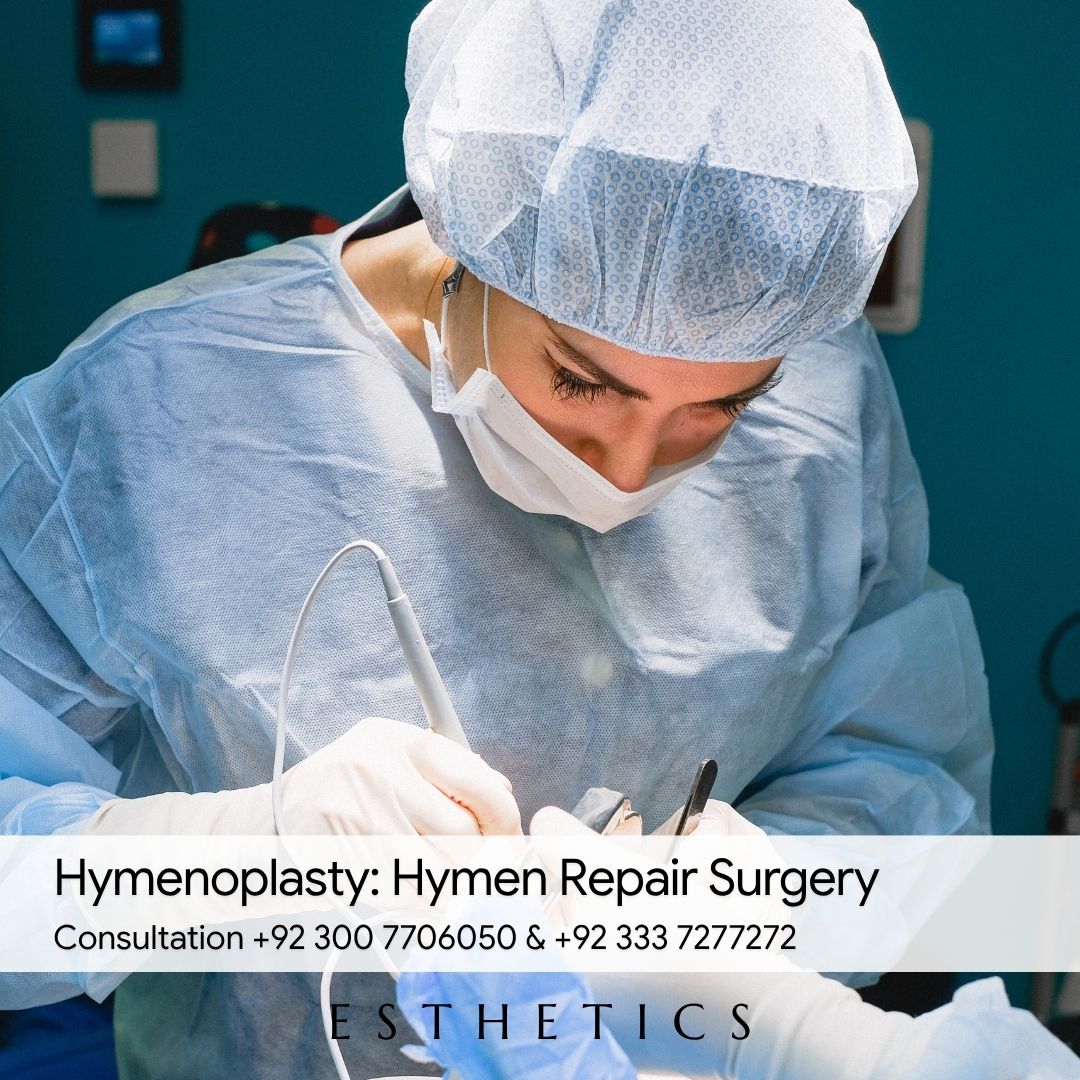
Hymenoplasty in Pakistan, also known as hymen repair surgery, hymen reconstruction, or hymen restoration, is a specialized cosmetic gynecological procedure intended to surgically reconstruct the remaining hymenal tissue. Women may consider hymenoplasty for a variety of personal, cultural, emotional, social, or restorative reasons.
The decision to undergo hymenoplasty is highly personal and should be made after a confidential consultation with a qualified gynecologist who can explain the procedure, realistic outcomes, possible complications, alternatives, and individual suitability.
For women searching for hymenoplasty in Pakistan, it is particularly important to choose a qualified cosmetic gynecologist and a healthcare setting where privacy, informed consent, appropriate surgical standards, and confidential patient care are prioritized.
What Is Hymenoplasty?
Hymenoplasty is a surgical procedure that attempts to reconstruct or repair the hymenal tissue around the vaginal opening. Depending on the individual’s anatomy and the amount of remaining hymenal tissue, a surgeon may use available tissue to reconstruct the hymenal rim.
The procedure is sometimes referred to as:
- Hymenoplasty
- Hymen repair surgery
- Hymen reconstruction
- Hymen restoration surgery
- Hymen repair
- Hymenal reconstruction
- Hymen surgery
- Virginity reconstruction surgery
Although these terms are commonly used online, hymenoplasty should not be confused with a medical test for virginity.
A particularly important medical fact is that the appearance of the hymen cannot reliably establish whether someone has had sexual intercourse. The hymen naturally varies considerably between individuals, and its appearance can change for reasons unrelated to sexual activity.
For this reason, a consultation should focus on the patient’s health, anatomy, expectations, safety, and reasons for seeking treatment rather than attempting to determine or prove someone’s sexual history.
Why Do Women Consider Hymenoplasty in Pakistan?
Women may seek hymen reconstruction for different personal circumstances. There is no single reason why a woman chooses hymenoplasty.
Some women consider the procedure because of:
- Personal preference
- Cultural expectations surrounding marriage
- Emotional concerns
- Previous sexual experiences
- Previous trauma or abuse
- Changes to the hymenal tissue from non-sexual activities
- Desire for reconstruction after a previous injury
- Concerns related to marriage
- Psychological distress associated with the appearance of the hymen
- Individual expectations regarding intimate anatomy
The social and ethical circumstances surrounding hymenoplasty can be complex. Medical literature recognizes that women requesting hymen reconstruction may experience very different social environments and pressures. Research has also highlighted the importance of patient autonomy, informed consent, privacy, and understanding the patient’s individual circumstances.
A responsible consultation should therefore be non-judgmental and confidential.
Hymenoplasty and the Concept of Virginity
One of the most important aspects of hymenoplasty is understanding that the hymen is not a medically reliable indicator of virginity.
The hymen is a thin tissue structure located around the vaginal opening. Its shape, thickness, elasticity, and appearance differ naturally between women. It may also change through various physical and biological circumstances.
Therefore:
Hymen appearance cannot reliably confirm whether a woman has had sexual intercourse.
Similarly, bleeding during first intercourse is not a medically reliable way to determine virginity.
This distinction is important because many women search online for terms such as “virginity surgery,” “virginity restoration,” or “hymen repair surgery in Pakistan.” A qualified healthcare professional should explain the medical facts clearly rather than promising that surgery can prove a person’s sexual history.
What Is Hymen Reconstruction Surgery?
Hymen reconstruction involves carefully approximating available hymenal tissue to recreate a hymenal rim or membrane-like structure.
The exact surgical approach depends on:
- Existing hymenal tissue
- Individual anatomy
- Previous injuries or procedures
- The patient’s expectations
- The surgeon’s assessment
- Overall gynecological health
There is no single technique that is appropriate for every patient.
During consultation, the doctor can assess the anatomy and discuss whether hymenoplasty is technically appropriate.
Because evidence supporting female cosmetic genital procedures is limited and the procedures can involve complications, professional recommendations emphasize specialist evaluation, realistic expectations, informed consent, and careful assessment of the patient’s psychological, social, and sexual context.
How Is Hymenoplasty Performed?
The surgical process can vary according to the individual’s anatomy and the surgeon’s preferred technique.
Generally, hymenoplasty involves several stages.
1. Confidential Consultation
The first stage is a private consultation with a qualified gynecologist.
The doctor discusses:
- Medical history
- Previous gynecological procedures
- Current symptoms
- Previous injuries
- Expectations
- Reasons for seeking reconstruction
- Surgical suitability
- Potential risks
- Recovery requirements
This consultation gives the patient an opportunity to ask questions before making a decision.
2. Gynecological Assessment
A clinical assessment may be performed when appropriate and with the patient’s informed consent.
The purpose is to understand the anatomy and determine whether reconstruction is technically feasible.
3. Surgical Planning
If the patient is considered suitable, the surgeon explains the proposed surgical approach and expected recovery.
The patient should understand that surgical outcomes vary and that no ethical surgeon should guarantee a specific result without considering individual anatomy.
4. Hymenal Tissue Reconstruction
During the procedure, the surgeon carefully reconstructs available hymenal tissue using appropriate surgical techniques.
The objective is anatomical reconstruction rather than creating a medically verifiable “proof” of virginity.
5. Postoperative Care
After surgery, the patient receives instructions regarding hygiene, physical activity, medications when prescribed, and follow-up.
Following postoperative instructions is important for proper healing and reducing the risk of complications.
How Long Does Hymenoplasty Take?
The duration of hymenoplasty varies according to the surgical technique, anatomy, and clinical circumstances.
Many hymenoplasty procedures are performed as relatively short outpatient procedures, but the exact duration should be determined by the treating surgeon.
Patients should avoid choosing a surgeon solely because a website promises an exceptionally short procedure. Surgical safety and appropriate patient assessment are more important than speed.
Is Hymenoplasty Painful?
Some discomfort, tenderness, swelling, or sensitivity can occur after hymenoplasty.
The level of discomfort differs between patients and depends on factors such as:
- Surgical technique
- Individual pain tolerance
- Healing response
- Extent of reconstruction
- Postoperative care
The surgeon can explain appropriate pain-management measures during the consultation.
Patients should contact their healthcare provider if they experience severe or worsening pain, significant bleeding, fever, unusual discharge, or other concerning symptoms after surgery.
Hymenoplasty Recovery
Recovery after hymenoplasty varies from patient to patient.
During the early recovery period, patients may be advised to:
- Keep the area clean and dry according to medical instructions
- Avoid strenuous physical activity temporarily
- Follow prescribed medications
- Attend follow-up appointments
- Avoid sexual activity until the surgeon confirms appropriate healing
- Avoid activities that may place unnecessary pressure on the surgical area
- Follow all postoperative hygiene instructions
The surgeon should provide individualized instructions because recovery can differ depending on the technique and the patient’s anatomy.
When Can Normal Activities Be Resumed?
The timeline for returning to normal activities depends on healing and the surgeon’s instructions.
Light daily activities may often be resumed relatively soon, while strenuous exercise, cycling, horseback riding, heavy physical activity, and sexual intercourse may need to be avoided for a period of time.
Patients should not rely on generic timelines found online. The safest approach is to follow the postoperative instructions provided by the treating gynecologist.
Is Hymenoplasty Permanent?
Hymenoplasty reconstructs tissue, but it does not permanently recreate the exact anatomy a person may have had earlier in life.
Healing and long-term results can vary depending on:
- Individual anatomy
- Surgical technique
- Amount of available tissue
- Healing response
- Postoperative care
- Future sexual activity or physical trauma
Therefore, patients should discuss the expected result directly with their surgeon rather than relying on guarantees found in advertisements.
Can Hymenoplasty Guarantee Bleeding?
No responsible medical provider should guarantee bleeding after intercourse.
Bleeding during first intercourse is not a reliable indicator of virginity, and surgical reconstruction cannot guarantee a particular physiological response.
Patients considering hymenoplasty should be given realistic information about what surgery can and cannot accomplish.
This is one of the most important distinctions between responsible medical consultation and promotional claims.
Risks and Possible Complications of Hymenoplasty
Like other surgical procedures, hymenoplasty can have risks.
Possible complications may include:
- Pain
- Swelling
- Bruising
- Bleeding
- Infection
- Scarring
- Delayed healing
- Tissue separation
- Changes in sensation
- Discomfort
- Unsatisfactory cosmetic result
- Need for further medical evaluation or treatment
Female cosmetic genital surgery is not completely free of complications, and professional recommendations emphasize informed consent and appropriate specialist evaluation.
Patients should discuss their individual risk profile with their gynecologist before proceeding.
Who May Be Suitable for Hymenoplasty?
Suitability can only be determined after an appropriate medical consultation.
A doctor may consider factors including:
- General health
- Gynecological health
- Existing hymenal anatomy
- Previous procedures
- Current medications
- Medical history
- Expectations
- Ability to follow postoperative instructions
A consultation should also explore whether the patient’s expectations are realistic and whether there are social or psychological circumstances that require additional support.
Professional recommendations regarding female cosmetic genital procedures emphasize specialist assessment and consideration of the patient’s broader psychological, social, and sexual context.
Who May Not Be a Good Candidate?
Hymenoplasty may not be appropriate for every individual.
A doctor may recommend postponing or avoiding surgery when there is:
- An active infection
- An untreated gynecological condition
- Significant medical risk
- Unrealistic expectations
- Inability to follow postoperative instructions
- A need for further medical assessment
- Another condition requiring treatment first
The final decision should be made after an individualized consultation.
Hymenoplasty for Marriage in Pakistan
Marriage is one of the reasons some women search for hymenoplasty in Pakistan.
Cultural expectations surrounding virginity can create significant anxiety for some women. The medical literature has discussed the social and ethical complexities surrounding hymen reconstruction, including situations in which women may fear serious social consequences or violence.
However, every patient has a different situation.
A healthcare provider should not make assumptions about a patient’s culture, beliefs, relationship, or reasons for requesting surgery. Instead, the consultation should provide accurate medical information and allow the patient to make an informed decision.
If a woman feels threatened or unsafe because of expectations surrounding virginity, her safety should be treated as a serious concern, and appropriate professional support should be considered.
Is Hymenoplasty Medically Necessary?
In most circumstances, hymenoplasty is considered an elective reconstructive or cosmetic procedure rather than a treatment for a disease.
The medical literature contains ongoing ethical debate about hymenoplasty, and there is limited evidence supporting many female cosmetic genital procedures.
This does not mean that a woman cannot discuss the procedure with a qualified gynecologist. It means that the decision should involve:
- Accurate medical information
- Understanding of risks
- Realistic expectations
- Voluntary informed consent
- Confidential consultation
- Consideration of personal circumstances
Hymenoplasty vs. Hymen Repair
The terms hymenoplasty and hymen repair are often used interchangeably.
“Hymenoplasty” generally refers to surgical reconstruction of hymenal tissue, while “hymen repair” is a more patient-friendly term commonly used when searching for the procedure online.
Other common search terms include:
- Hymen repair surgery in Pakistan
- Hymenoplasty surgery Pakistan
- Hymen reconstruction Pakistan
- Hymen restoration Pakistan
- Hymen repair doctor Pakistan
- Hymenoplasty clinic Pakistan
- Hymenoplasty surgeon Pakistan
- Hymenoplasty consultation Pakistan
Patients should remember that terminology can vary between clinics and countries, so it is best to ask the doctor exactly what procedure is being proposed.
Choosing a Hymenoplasty Doctor in Pakistan
Choosing the right doctor is one of the most important decisions when considering hymenoplasty.
Patients should consider:
Qualified Gynecological Training
Look for a doctor with appropriate qualifications in obstetrics and gynecology or a relevant surgical specialty.
Experience in Aesthetic Gynecology
A doctor with specific training in aesthetic gynecology may be familiar with the anatomy and concerns associated with intimate cosmetic procedures.
Confidential Consultation
Because hymenoplasty can involve highly private personal circumstances, confidentiality and respectful communication are particularly important.
Informed Consent
The doctor should explain the procedure, potential benefits, limitations, risks, recovery, and alternatives before surgery.
Realistic Expectations
Avoid providers who promise guaranteed bleeding, guaranteed virginity, or a guaranteed outcome.
Appropriate Clinical Environment
The procedure should be undertaken in an appropriate medical environment with suitable infection-control and surgical standards.
Hymenoplasty in Pakistan: Why Consultation Matters
Online searches can provide general information, but they cannot determine whether hymenoplasty is suitable for a particular patient.
A consultation allows the gynecologist to understand the patient’s concerns and provide individualized advice.
During consultation, patients can ask:
- Am I suitable for hymenoplasty?
- Which technique would be appropriate for me?
- What results can realistically be expected?
- What are the risks?
- How long is recovery?
- When can I return to normal activities?
- What follow-up will I need?
- Are there alternatives?
- What should I avoid during recovery?
A qualified doctor should answer these questions honestly rather than pressuring the patient to proceed.
Confidentiality and Privacy
Privacy is especially important for intimate gynecological procedures.
Patients considering hymenoplasty should look for a clinic that maintains appropriate confidentiality and treats sensitive medical information responsibly.
The consultation should provide a comfortable environment in which patients can discuss their concerns without judgment.
Frequently Asked Questions About Hymenoplasty in Pakistan
What is hymenoplasty in Pakistan?
Hymenoplasty is a surgical procedure designed to reconstruct or repair remaining hymenal tissue. It is also known as hymen repair or hymen reconstruction.
Is hymenoplasty the same as virginity testing?
No. Hymenoplasty is a surgical reconstruction procedure, while so-called virginity testing attempts to make conclusions about sexual history from physical examination. The appearance of the hymen cannot reliably establish whether someone has had sexual intercourse.
Does hymenoplasty guarantee bleeding?
No. A responsible medical provider cannot guarantee bleeding after intercourse.
Is hymenoplasty painful?
Some pain, tenderness, swelling, or discomfort may occur following surgery. Individual experiences vary.
How long is the recovery?
Recovery differs according to the surgical technique and individual healing. Your gynecologist will provide personalized postoperative instructions.
Can every woman have hymenoplasty?
No. Suitability depends on individual anatomy, medical history, health, expectations, and other clinical factors.
Is hymenoplasty safe?
Every surgical procedure carries potential risks. Hymenoplasty should be discussed with a qualified gynecologist who can assess individual risks and explain informed consent.
Can hymenoplasty restore the original hymen exactly?
Surgery reconstructs tissue but cannot guarantee an exact recreation of a person’s original anatomy.
Is hymenoplasty available in Pakistan?
Hymenoplasty is offered by some gynecological and aesthetic gynecological practitioners in Pakistan. Patients should verify the doctor’s qualifications, experience, clinical setting, and approach to informed consent before choosing a provider.
Should I consult a gynecologist before hymenoplasty?
Yes. A confidential consultation is important to determine suitability, discuss expectations, understand potential risks, and receive individualized medical advice.
Hymenoplasty in Pakistan: A Patient-Centered Approach
Searching for hymenoplasty in Pakistan can be an emotionally difficult experience for some women. The decision may involve personal relationships, marriage, cultural expectations, previous experiences, or concerns about intimate anatomy.
For that reason, the quality of the consultation matters as much as the procedure itself.
A patient-centered approach should include:
Privacy: Your concerns should be discussed confidentially.
Respect: You should be treated without judgment.
Medical accuracy: The doctor should explain what hymenoplasty can and cannot achieve.
Informed consent: You should understand potential risks before deciding.
Realistic expectations: No medical provider should promise outcomes that cannot be guaranteed.
Individualized assessment: Your anatomy and medical history should be considered rather than applying the same approach to every patient.
Consult Dr. Naila Frukh for Hymenoplasty in Pakistan
Women looking for a cosmetic gynecologist in Pakistan can discuss their concerns privately with Dr. Naila Frukh, Cosmetic Gynecologist.
Dr. Naila Frukh
Cosmetic Gynecologist in Pakistan
Qualifications & Experience
- MBBS – Nishtar Hospital (2015)
- WMO – Population Welfare Department (2016)
- FCPS – Obstetrics & Gynecology (2024)
- Fellowship in Aesthetic Gynecology – American Board (2023)
Dr. Naila Frukh provides consultation for women interested in aesthetic and cosmetic gynecology, including discussions surrounding hymenoplasty and hymen reconstruction.
A private consultation allows you to discuss your individual circumstances, understand whether the procedure may be appropriate for you, and receive professional guidance about the procedure, recovery, risks, and expected outcomes.
Book a Confidential Consultation
Dr. Naila Frukh
Cosmetic Gynecologist in Pakistan
For consultation: +92 333 7277272
For appointments and further information, visit Esthetics.com.pk.
Women considering hymenoplasty should seek professional medical advice rather than making a decision based solely on online advertisements or promises of guaranteed results. The goal of a consultation should be safe, informed, confidential, and patient-centered care.